Bandra - Mumbai, Vashi - Navi Mumbai, Pune, Bangalore, Hyderabad
 ChatGPT
 Perplexity
 Claude

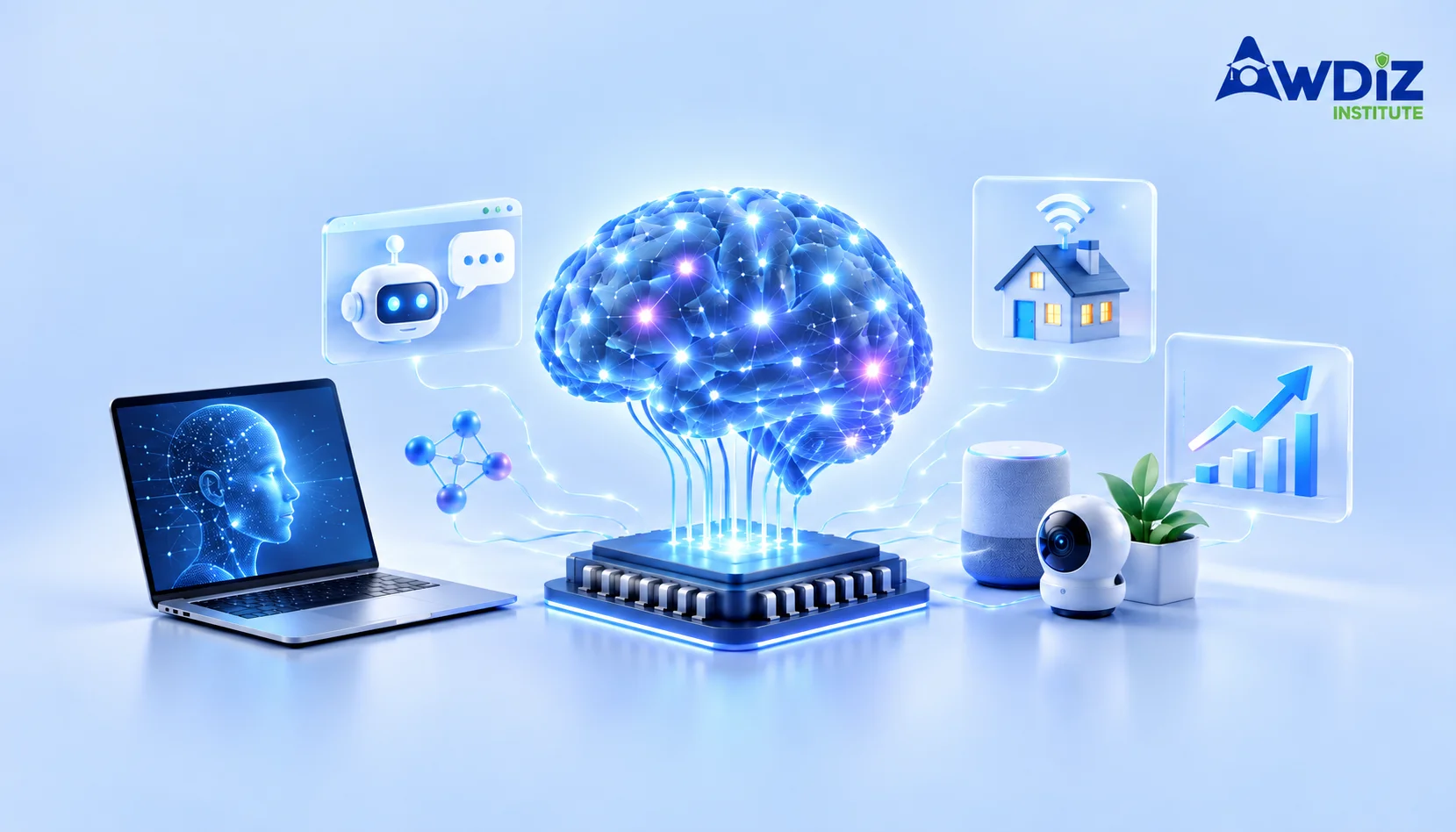
Artificial Intelligence, usually called AI, is technology that allows computers and software to perform tasks that typically require human-like abilities, such as recognizing patterns, understanding language, making predictions and generating useful responses. AI does not mean every machine thinks like a person. Most real-world AI tools are built to perform a particular set of tasks and depend on data, algorithms and human-designed objectives.
You may already use AI when you search for information, receive recommended videos, speak to a digital assistant or use software that checks an image for objects. The important question is not whether a product advertises itself as AI, but what it can do, what information it uses and how accurately it performs.
Artificial Intelligence Meaning in Simple Words
Imagine a program that can identify whether an email is likely to be spam. A conventional program might rely on a small list of fixed rules, such as blocking messages containing a certain phrase. An AI-based classifier can learn patterns from many labeled examples and estimate whether a new message is spam. It may consider combinations of signals that are harder to describe with a few simple rules.
That is one practical way to understand AI: instead of manually specifying every decision, developers can use models that learn useful relationships from examples. Not every AI technique requires learning from data, however; reasoning and rule-based systems are also part of AI's history.
How Is AI Different from Normal Software?
Traditional software usually follows explicit instructions for handling inputs. AI software may also use learned models to classify information, predict values or generate content. Both approaches rely on software written by people, and many modern applications combine the two.
For example, an online shopping website may use normal software to calculate shipping fees and an AI recommendation model to suggest products. The shipping rule can be precise, while recommendations involve uncertainty and statistical predictions.
Real-Life Examples of Artificial Intelligence
1. Search and Recommendations
Search tools may use AI to understand the meaning of a question and rank relevant information. Streaming services may analyze viewing patterns to suggest films or music. These systems aim to make large collections easier to explore, but recommendations can still be unsuitable or repetitive.
2. Language and Writing Assistance
AI assistants can summarize notes, draft emails, translate text and explain concepts. Generative systems produce new output based on patterns learned during training and the instructions they receive. Their responses can sound confident while containing errors, so important information should be verified.
3. Image and Speech Recognition
AI can help recognize objects in photographs, convert spoken words into text and support accessibility features such as captions. Accuracy may change depending on lighting, accents, background noise and the kinds of examples seen during development.
4. Fraud and Security Monitoring
Organizations may use AI to flag unusual transactions or suspicious activity for further inspection. Such systems can reduce manual review, but false alarms and missed cases mean trained human oversight still matters.
5. Healthcare and Education
AI may help professionals analyze medical images or organize information for further review. In learning platforms, AI can generate practice questions or provide explanations. High-stakes decisions should remain subject to suitable expert oversight rather than relying on unchecked output.
Important Branches of AI
- Machine learning uses data to train systems that make predictions or classifications.
- Deep learning uses multilayer neural networks and is widely used for complex language, image and speech tasks.
- Natural language processing focuses on computers working with human language.
- Computer vision deals with interpreting images and video.
- Generative AI produces text, images, audio, code or other content based on prompts.
These branches overlap. A language assistant can involve machine learning, deep learning, NLP and generative AI at the same time. For a closer look at the broader categories, read Types of Artificial Intelligence.
Benefits of Artificial Intelligence
AI can help people handle repetitive information-processing tasks, uncover patterns in large data collections, provide faster first drafts and make certain digital services more accessible. It is especially useful when the objective can be measured and the system's results can be checked. But benefits depend on good data, careful evaluation, clear limitations and a task suited to the technology. Using AI where a simple rule would work better can add unnecessary expense and complexity.
Limitations and Risks of AI
AI systems can make incorrect predictions, generate false statements, reflect biases present in their data and behave poorly when conditions differ from their training examples. They may also create privacy and security risks when confidential data is entered into unsuitable tools. People should understand who is accountable for decisions and what checks are needed before deploying AI in real situations.
How Can a Beginner Start Learning AI?
Start by understanding what models do and how AI differs from ordinary automation. Use a few familiar tools to compare their outputs. Next, explore simple data concepts and the role of training and testing. If you want to build systems, begin programming basics—often Python—and move into small practical projects.
You can follow How Does Artificial Intelligence Work? for the next step, or explore AI Course for Beginners for a structured learning plan.
Conclusion: Artificial Intelligence is a broad field focused on making machines capable of tasks such as recognition, prediction, language processing and content generation. Understanding its real applications and limitations is the strongest foundation for further learning. The next useful step is to explore how data and models turn input into an AI output.
Further reading: IBM: What is AI?
Frequently Asked Questions
No. A robot is a physical machine; AI is a collection of computational methods. Some robots use AI, while many AI systems work entirely as software.
Current practical AI systems can perform impressive tasks, but that does not demonstrate human-style understanding, consciousness or general intelligence. Claims about machine consciousness remain disputed.
No. AI tools can assist people in writing, design, analysis, education and other fields. Building and maintaining AI software usually requires greater technical knowledge.