Bandra - Mumbai, Vashi - Navi Mumbai, Pune, Bangalore, Hyderabad
 ChatGPT
 Perplexity
 Claude

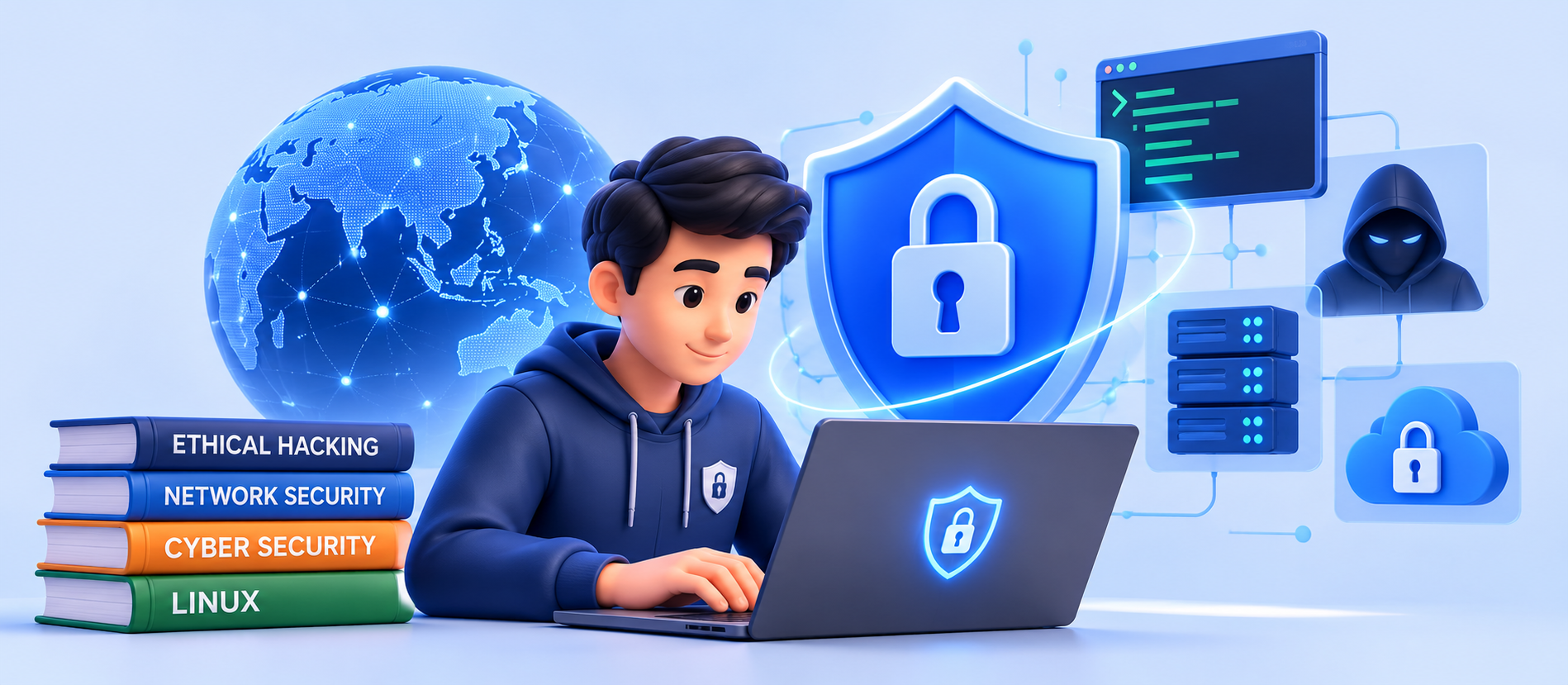
Yes, you can learn cyber security on your own! This complete guide shows you how to self-learn cyber security, what resources you need, and how to overcome common challenges.
Can You Learn Cyber Security Yourself?
Absolutely yes! You can learn cyber security on your own. Many professionals in the industry today are self-taught. With the abundance of free resources, online courses, and practice platforms, anyone with dedication and discipline can master cyber security fundamentals.
The key to successful self-learning is having a structured plan, consistent practice, and access to the right resources. Many websites offer free tutorials, labs, and documentation that can take you from beginner to intermediate level.
In practice, “on your own” in 2026 rarely means learning in isolation. It means using TryHackMe guided rooms instead of a classroom, asking doubts on Discord and Reddit’s r/AskNetsec instead of raising a hand, and validating skills with CompTIA Security+ mocks instead of internal exams. Mumbai students who treat these platforms as their campus — fixed hours, weekly targets, written lab notes — routinely reach SOC L1 readiness in 6–9 months of 1–2 daily hours.
The honest caveat is sequencing. Solo learners who jump between random YouTube “hacking” videos stall for months, while those who follow networking → Linux → security concepts → Wireshark/Nmap/Burp Suite → Splunk log triage progress steadily. Use a single written roadmap (this guide works), tick off one TryHackMe path at a time, and do not start Metasploit or Burp Suite before your networking and Linux base is comfortable.
Benefits of Self-Learning Cyber Security
Learning cyber security on your own has several advantages:
- Cost-effective: You can start with free resources and only invest when necessary.
- Flexible timing: Learn at your own pace, anytime that suits you.
- Self-paced progression: Move quickly through easy topics, spend more time on difficult ones.
- Builds discipline: Self-learning develops strong habits and time management skills.
- Portfolio-first learning: Every TryHackMe room, Wireshark capture and Splunk search you document becomes public proof on your resume and LinkedIn, which Mumbai SOC interviewers value highly.
- Tool fluency at low cost: Kali Linux, VirtualBox, Wireshark, Nmap and Burp Suite Community Edition are all free, so your Month 2 tool practice costs nothing beyond a laptop with 8GB+ RAM and a stable connection.
For Mumbai students juggling college in Andheri or a day job in Goregaon, flexibility is the decisive benefit. A 6 a.m. lab hour before lectures or a 10 p.m. Splunk session after shifts still compounds — 1–2 focused hours daily for six months beats irregular 8-hour weekend binges. Self-learning also lets commerce and arts graduates linger on Month 1 networking without feeling “behind a batch”.
There is a career benefit too: recruiters can see self-driven proof. A GitHub repo with four one-page lab reports (Nmap scan, Wireshark analysis, Burp interception, log triage) plus a completed TryHackMe profile signals exactly the initiative SOC leads want in L1 analysts who will work night rotations with limited supervision.
Challenges of Self-Learning
While self-learning is possible, it comes with its own set of challenges:
- Lack of mentorship: No one to guide you when you get stuck.
- No structured curriculum: You must create your own learning path.
- Limited practical experience: May miss hands-on lab practice.
- No placement support: No help with job interviews or placements.
- Procrastination: Easy to delay when there's no deadline.
- Tool doubt traps: A single Kali, VirtualBox or Splunk configuration error can cost a solo beginner three evenings, whereas a mentor fixes it in ten minutes.
- Interview blindness: Without mocks you do not learn that Mumbai L1 panels expect 60–90 second answers on DNS, CIA triad, firewall vs IDS vs IPS, and one SPL search example.
The most expensive challenge is time. Solo learners without a written plan average 6–12 months to SOC readiness versus 4–6 months in a structured batch, largely because of topic-hopping and month-long gaps. The fix is artificial accountability: publish weekly targets (e.g., “finish two TryHackMe rooms + one lab note”), join a Discord study group with Sunday check-ins, and book a paid mock interview every six weeks even before you feel “ready”.
Placement is the second gap. Free learning teaches Wireshark but not how to convert it into a resume bullet, a Naukri filter strategy for BKC banks and Andheri IT firms, or answers to HR questions about night shifts. If placements are urgent, pair self-learning with a short placement-focused module in Months 4–5 rather than abandoning your solo progress.
Best Resources for Self-Learning
Free Online Courses
Coursera, edX, and Udemy offer free cyber security courses from top universities.
Practice Labs
TryHackMe, HackTheBox, and PortSwigger Web Security Academy for hands-on practice.
YouTube Tutorials
Channels like CyberTalks, Nullbyte, and David Bombal provide excellent free content.
Books & Documentation
"The Web Application Hacker's Handbook" and official documentation are great resources.
Use this stack in order. Months 1–2: TryHackMe Pre-Security and Complete Beginner paths for networking, Linux and intro security, plus Professor Messer’s free Security+ videos and NetworkChuck playlists for concepts. Months 2–3: Kali Linux official docs, Wireshark user guide and Nmap man pages alongside every lab — reading docs while capturing packets builds the exact habit SOC analysts use daily. Months 3–4: PortSwigger Web Security Academy (free) for SQL injection and XSS basics, Splunk Fundamentals free training, and OWASP Top 10 documentation.
For books, start with practical ones:OWASP Testing Guide excerpts (free PDF) before the full Web Application Hacker’s Handbook, and CompTIA Security+ study guides (library or second-hand) for exam structure. Indian students should also bookmark CERT-In advisories and NIST Cybersecurity Framework summaries — quoting one recent advisory in an interview instantly signals awareness beyond tutorials. Avoid paid bootcamps until you have finished at least 20 free rooms; you will then know exactly which gap (mentorship, SOC labs, or placement) deserves your money.
Tips for Successful Self-Learning
- Create a study schedule: Dedicate 1-2 hours daily for consistent learning.
- Start with fundamentals: Learn networking, Linux, and basic security concepts first.
- Practice regularly: Use virtual machines and lab environments for hands-on experience.
- Join communities: Participate in Reddit, Discord groups, and forums for support.
- Build projects: Create your own labs, document your learning, build a portfolio.
- Get certified: Consider certifications like CompTIA Security+ to validate skills.
- Simulate SOC shifts: From Month 3, do weekly 2-hour triage drills — one phishing email, one Splunk log set, one Nmap finding — and write the escalation ticket you would raise in a BKC or Powai SOC.
- Stay legal by design: Test only your own VMs and authorised lab targets. Unauthorised scanning of real Indian company or government systems violates the IT Act and destroys employability.
Make your schedule failure-proof: same time daily, phone on silent, one room plus one written note per session. Keep a single “commands and concepts” file where every Nmap flag, Wireshark filter and SPL search gets one example line — this file becomes your Month 5 interview revision pack. Every Sunday, re-explain the week’s topic aloud in two minutes; if you hesitate on DNS, permissions or the CIA triad, repeat the lab before advancing.
For Mumbai job outcomes, add two placement habits from Month 4: link your TryHackMe profile and GitHub lab reports on your LinkedIn headline, and apply to 8–10 SOC L1 and IT-security support roles weekly across BKC, Andheri, Goregaon and Powai. Solo learners who combine steady labs with early, high-volume applications typically convert within 2–3 months of becoming technically ready.
Frequently Asked Questions
Yes, you can learn cyber security basics for free using resources like TryHackMe, YouTube, and free courses on Coursera. However, advanced topics may require paid courses. For SOC L1 readiness, the free tier plus disciplined lab notes is genuinely sufficient; budget for CompTIA Security+ exam fees only when you are consistently scoring 80%+ on mocks.
It typically takes 6-12 months of consistent learning to become job-ready. Basic concepts can be learned in 3-4 months. With 1–2 daily hours and zero gap weeks, most Mumbai beginners reach L1 interview readiness in 6–9 months; irregular study stretches this past a year.
Self-learning can help you land an entry-level job if you have strong practical skills and perhaps a certification. However, many employers prefer structured training with placement support. Close the gap with four one-page lab reports, a public TryHackMe profile, and 8–10 weekly applications to BKC, Andheri and Powai SOC openings.
Use virtual machines with VirtualBox, set up vulnerable labs like DVWA, or use platforms like TryHackMe and HackTheBox. Keep your lab isolated (host-only or NAT), snapshot before risky experiments, and document every Wireshark, Nmap and Splunk exercise as a mini-report for your portfolio.
Yes. Mumbai SOC L1 panels test networking, Linux, tool output and triage logic — not your degree title. Commerce and arts graduates succeed regularly by spending extra weeks on Month 1 fundamentals, then following the same TryHackMe plus Splunk path as CS students.
Join when you stall for more than three weeks, need Splunk/SOC lab depth you cannot build alone, or want placement velocity. A common hybrid is 3–4 months of free self-learning for fundamentals, then a 2–3 month placement-focused module for SOC drills, mocks and referrals.